



 Admin
Admin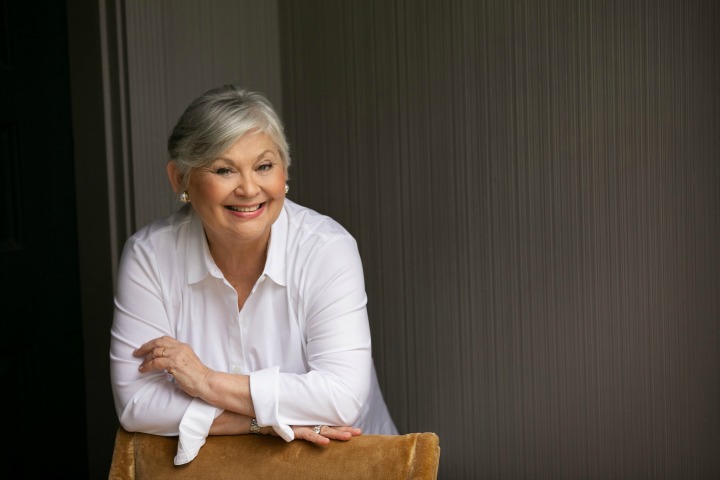
Esther Safran Foer.
Esther Safran Foer wrote her new “post-Holocaust memoir,” I Want You To Know We’re Still Here, before the Covid-19 pandemic.
Yet the third paragraph of the book resonates, as if it anticipated the current crisis. She writes about how her Holocaust-survivor mother, who died in 2018, had a kitchen cabinet with “enough flour and cereal, all of it purchased on sale, to withstand a major catastrophe.”
In a phone interview with The Algemeiner, Foer said she thought of her mother’s emergency stockpile — and her additional “storage cabinet downstairs, with more” –recently amid the pandemic. It was Thursday night, and Foer was scrambling to procure ingredients to bake challah. Her Instacart shopper texted her a photograph of bare supermarket shelves. “There was no flour. I should have stocked up,” Foer said.
That may be the most direct and practical way that the book speaks to the present moment, but it is not at all the only one.
Foer’s own family’s tale is too complicated to recount here fully. Anyway, doing so would spoil the suspense. In the book, it’s a page-turner, a detective story in which Foer figures out what happened during World War II to her parents and to a half-sister she never knew.
It is full of Holocaust horrors. A synagogue packed full of Jews, then torched. Poorly-maintained monuments marking mass graves. The suicide in 1954 of Foer’s father, a victim of the Holocaust nearly a decade after having survived it.
Yet the book also includes pictures of Foer’s smiling children and grandchildren, some of whom are named after those who died in the Shoah. It recounts, in glimpses, Foer’s ascent to elite levels of Washington’s political and press establishment — NPR reporter Mara Liasson, Washington Post managing editor Robert Kaiser and National Security Adviser Sandy Berger all make appearances.
The book carries enthusiastic blurbs from the editor of The Atlantic, Jeffrey Goldberg, and from Kati Marton, a writer who was married first to ABC News anchor Peter Jennings and then to diplomat Richard Holbrooke. “Take that, Hitler!” is what one of Foer’s children exclaimed at her mother’s funeral, surveying the family.
In my phone call with Foer, I observe that the family might have been even bigger if not for Hitler, and that for a vanquished foe he nonetheless loomed large. The Jews and the Allies beat Hitler, for sure, but it was close.
“We can’t change what happened. I wish we could,” she said, describing the book as “not an attempt to claim victory.”
“It’s filled with sadness,” she said. At the same time, she said her mother was “an incredible optimist, and I am too,” having spent most of her life focused on building the future, through her family and professionally, as the CEO of Sixth and I, a Jewish events space and community cultural and religious center in Washington, DC.
Foer writes in the book about this paradox with admirable self-awareness: “To know me, you would think I am a happy woman with an easy smile — which I am. But at the same time, my joy is tempered by the shadows of the past.”
That widely-shared post-Holocaust Jewish condition seems, to this reader at least, as relevant to daily life during the coronavirus pandemic as is stocking up on flour. The combination of being able to be happy and optimistic and looking forward while also open to the sadness is precisely the mindset needed for now.
And, I was recently reminded, it is not anything that came only after the Nazis.
The Babylonian Talmud, in Brachot 30b and 31a, pages that many Jews read earlier this year as part of the new “daf yomi” cycle of learning a two-sided page a day, records that this tempering of joy has been intrinsic to Judaism since the fall of Jerusalem and destruction of the Temple in 70 CE, and will remain so until the messianic era:
What is the meaning of rejoice with trembling? Rav Adda bar Mattana said that Rabba said: One may not experience unbridled joy; even where there is rejoicing, there should be trembling.. …
On a similar note, the Gemara relates: Mar, son of Ravina, made a wedding feast for his son and he saw the Sages, who were excessively joyous. He brought a valuable cup worth four hundred zuz and broke it before them and they became sad.
The Gemara also relates: Rav Ashi made a wedding feast for his son and he saw the Sages, who were excessively joyous. He brought a cup of extremely valuable white glass and broke it before them, and they became sad.
Similarly, the Gemara relates: The Sages said to Rav Hamnuna Zuti at the wedding feast of Mar, son of Ravina: Let the Master sing for us. Since he believed that the merriment had become excessive, he said to them, singing: Woe unto us, for we shall die, woe unto us, for we shall die…
In a similar vein, Rabbi Yoḥanan said in the name of Rabbi Shimon ben Yoḥai: One is forbidden to fill his mouth with mirth in this world, as long as we are in exile (ge’onim), as it is stated: “When the Lord returns the captivity of Zion we will be as dreamers” (Psalms 126:1). Only “then will our mouths fill with laughter and our lips with song” (Psalms 126:2).
This Talmud was accessible on the internet and in translation through Sefaria.org, a Jewish text website pioneered by one of Foer’s sons, Joshua. That connection, in turn, was enough to bring me joy — not excessive or unbridled joy, but a smile nonetheless, which is not bad for a post-Holocaust memoir full of sadness published in the midst of a pandemic. Take that Hitler, indeed. Or leave Hitler out of it, even: just take it, with gratitude.
Ira Stoll was managing editor of The Forward and North American editor of The Jerusalem Post. His media critique, a regular Algemeiner feature, can be found here.